
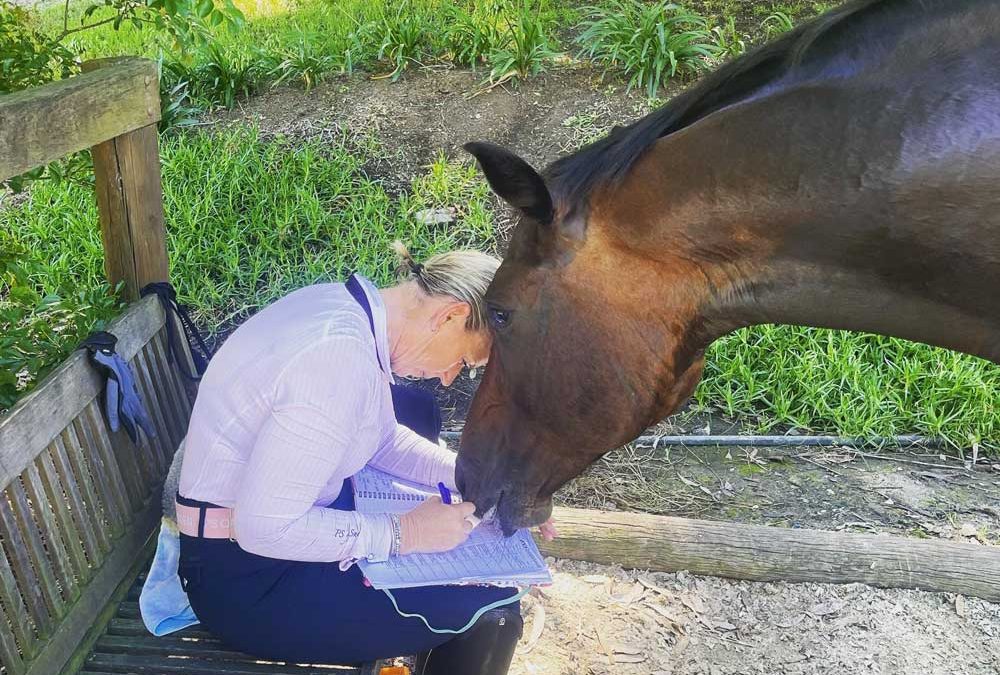
Radical thinking to change the way horses respond to us
⸻
The starting belief
I believe horses are not resisting us —
they are responding to the conditions we create.
Behaviour is not attitude.
It is information.
And the nervous system decides what is possible long before training does.
⸻
The principle that changes everything
You cannot train a horse into the thinking brain.
You have to create the conditions for it.
This principle reframes the rider’s job —
from demanding answers
to making answers possible.
⸻
The three brains
A horse operates through three primary brain systems:
- A survival (reptilian) brain that reacts to threat
- A limbic (emotional) brain that remembers how things felt
- A thinking (cortical) brain where learning and cooperation live
When the survival or limbic brain is active, the thinking brain is unavailable.
Learning requires safety.
⸻
Anthropomorphism breaks understanding
One of the most common training errors is anthropomorphism —
assigning human intent to a nervous system that works very differently.
“He’s naughty.”
“She’s lazy.”
“He knows better.”
“She’s doing it on purpose.”
These stories feel explanatory, but they are misleading.
Horses do not act from attitude.
They act from brain state.
When we judge intent instead of observing conditions,
we add pressure where clarity is needed.
⸻
Behaviour as data, not defiance
Spooking, tension, mouth activity, resistance, rushing, or shutdown
are not moral failures.
They are feedback.
They tell us:
- the nervous system is overloaded
- the question is unclear
- the body is uncomfortable
- or the conditions are not yet right
Behaviour isn’t a verdict.
It’s information.
⸻
The three anchors
- Effort is not the same as effectiveness
Trying harder does not mean the horse understands more. - Force is not the same as clarity
Stronger aids do not automatically communicate more clearly. - Struggle is not failure
Struggle shows us where capacity ends — not willingness.
⸻
What creating the conditions means
Creating conditions is not permissive.
It is not passive.
It requires:
- Predictable, fair pressure
- Clear timing and release
- Physical comfort
- Time to process
- Emotional neutrality from the rider
- Choice within boundaries
This is not doing nothing.
It is skilled regulation.
⸻
The rider’s responsibility
The rider’s job is not to demand answers from the horse.
It is to:
- regulate pressure
- read nervous-system state
- adjust conditions
- protect access to the thinking brain
Safety comes before obedience.
Clarity before intensity.
Regulation before repetition.
⸻
The guiding question
When something isn’t working, the question is not:
Why won’t my horse do this?
It is:
Which brain is available right now — and what conditions am I offering?
⸻
Closing
This approach is not loud.
It does not attack.
It does not need defending.
It simply explains.
And explanation is what ends miscommunication —
for horses, and for the people who care for them.